Party games that do good.
Goin Out Games sells real-world party card games where scanning a card lets guests push a charity up a live leaderboard. We built its storefront and game platform on headless Shopify and Next.js.
- Client
- Goin Out Games
- Service
- Web Development
- Year


Background
Brandon David found us through a referral, and he arrived with a clearer picture than most founders bring. Goin Out Games makes real-world party card games that break the ice on a night out with friends, at a birthday party or on a bachelorette weekend, and every game supports a charitable cause. Play for a purpose, as the brand puts it.
Part of it was already real. The card decks existed and sold through an aging store on an older ecommerce platform. Everything around them did not. The parties, the scanning, the charity leaderboard and the back office to run it all lived only in Brandon’s plans, and the store itself did not fit the brand he was building.
WeaveLines was hired to take it the rest of the way, a website launch that fit the brand, a modern ecommerce experience and the gamification that turns play into giving. What follows is how we built it.
Research
The storefront question
The first decision was what to do with commerce. Patching the existing store would keep its limits, and a standard store theme would trade them for someone else’s template. Neither could host a game platform.
We chose headless commerce instead. Shopify stays the commerce engine, running the catalog, the cart, the checkout and the payments it is trusted for, while the storefront is our own Next.js application with complete control over the frontend. Pages render on the server, which keeps the shop fast and gives search engines real HTML to index, and the same application hosts the parties, the bumps and the leaderboard that no store theme could carry.
That one decision meant the shop, the game and the cause would live on a single site rather than as three products stitched together.
Challenge
Three products, one site, zero friction
The site had to be three things at once. A storefront selling physical and digital products, a live game platform, and a running charity leaderboard, each feeding the others.
The harder constraint was the party itself. A printed card gets scanned in the middle of a game, on a phone, by a guest who may never have heard of the product. If that moment demands an account or a download, the game stalls. The bridge from paper to screen had to cost a guest nothing.
Our solution
We designed and built the platform in bi-weekly sprints, from the product management that set the scope to the storefront, the game platform and the back office that run Goin Out Games today.
01Product Management
Read moreWorkflows mapped, MVP decisions made and the scope estimated upfront, then a sprint rhythm that stayed on schedule and on budget.
02Design
Read moreA redesign of the initial website concept around the playful card identity, so the site finally fit the brand.
03Headless Storefront
Read moreShopify runs the catalog, the cart and the checkout while a Next.js frontend renders the whole shop on the server.
04The Game Platform
Read morePrinted cards resolve to live parties nearby, and a bump takes one tap with no account required.
05The Charity Leaderboard
Read moreReal causes ranked by bumps monthly and all time, with 1% of monthly sales going to the top cause.
06The Back Office
Read moreGames and card artwork managed in an admin application, with whole decks created in one drag and drop.
07Launch and Running Costs
Read moreLaunched in June 2024 on an architecture chosen to keep the monthly bills small.
01Product Management
Scope first, sprints after
This engagement ran the way we work when the vision is already sharp. Before any code, we went deep into product management and business analysis with Brandon, mapping user workflows, separating MVP capabilities from later ideas and turning the vision into a scoped plan with a rough order of magnitude estimate against it.
That upfront work is what kept the rest light. Development ran in bi-weekly sprints with recaps and planning every two weeks, immediate questions answered the same day or the next, and no heavier process than the project needed. The scope agreed at the start is the product that shipped, on schedule and within the budget we had set together.
02Design
A site that fit the brand
Goin Out Games already had an identity worth keeping. Playful card faces, a warm orange, a rounded typeface with personality. What it did not have was a website that looked like any of it.
We redesigned the initial website concept around that identity, with Figma as the main design tool, where the interface took its final form. The brand typeface leads the headings, the card artwork carries the how-to-play story, and the palette runs through everything from buttons to empty states, so the site reads as part of the game rather than a storefront bolted onto it.
We had been experimenting internally with v0, the generative UI tool Vercel opened to the public in late 2023, and this project was the chance to try it on real work. A written idea becomes a working page in minutes, which is a fast way to see how a layout holds up before designing it properly in Figma. The tool is still young and it shows. It produces one static screen at a time, the output rarely matches a brand without rework, and nothing it makes is ready to ship. As a way to test ideas quickly and discard the weak ones cheaply, it earned its keep.




03Headless Storefront
Shopify underneath, Next.js in front
The shop runs on the Shopify Storefront API. Products, collections, filters and the cart all come from Shopify data, and checkout hands off to Shopify itself, so payments, taxes and order handling stay with the platform built for them. The store sells physical decks and digital products through the same catalog, with customer reviews collected and shown on every product page.
In front of it, every page is rendered on the server by Next.js. Collection and product pages arrive as real HTML, quick to load and fully indexable, and a sitemap is generated from the live catalog so new products reach search engines without anyone thinking about it.
The same machinery carries the content. Stories, the blog behind the brand, is written in Shopify and served through the site with incremental regeneration, so a post published in the admin appears on the site within a minute with no deployment.
goinoutgames.com
One Next.js storefront, rendered on the server
Shopify
The commerce engine
- Catalog and collections
- Cart and checkout
- Orders and payments
- The Stories blog
Game platform
Postgres behind the play
- Parties and teams
- Bumps and comments
- Charity leaderboards
- Location search
Admin backoffice
Run by the Goin Out Games team
- Game setup
- Bulk card artwork
- Leaderboard reporting
04The Game Platform
From a printed card to a live party
Setting up a party takes a code and a few taps. An organizer enters the code that ships with their deck, names the party, sets the date and the timezone and picks the location with address autocomplete, then chooses the charities each team will play for.
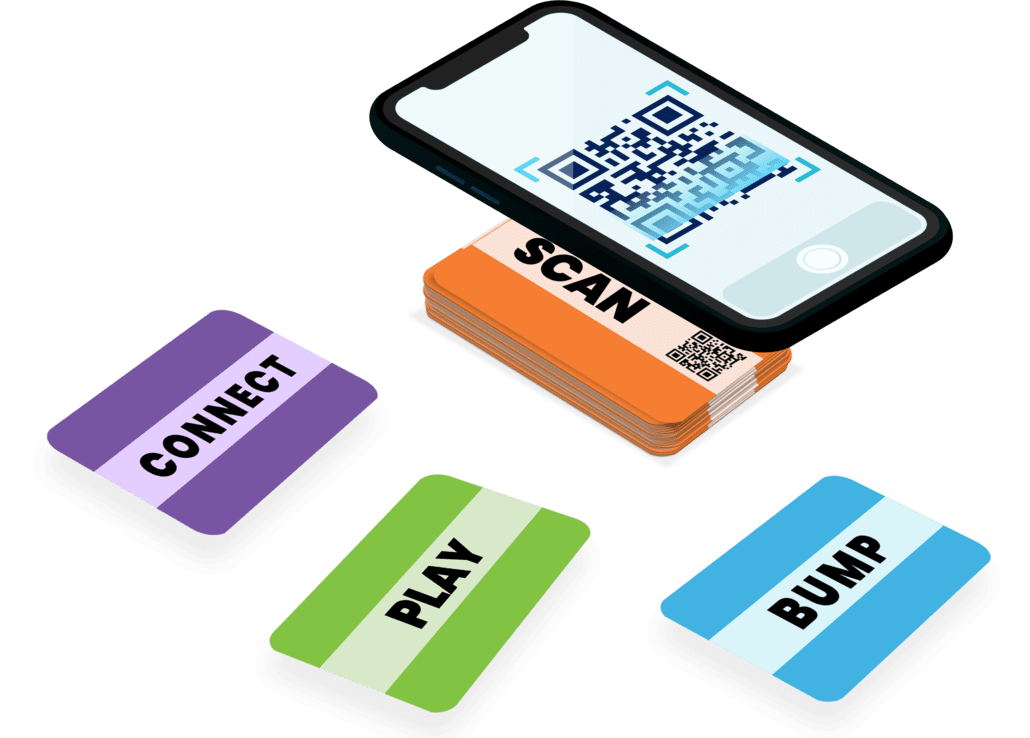
The cards do the rest. Every printed card carries a QR code, and scanning one opens the parties happening right now for that game, sorted by distance using geospatial queries in Postgres, so a guest lands in the right party in seconds. From there they can bump, pushing their team’s charity up the board, follow the countdown to the party’s end and leave comments.
Friction stayed where it belongs, at zero. A guest can bump once before ever being asked to sign in, and someone who bumped one team cannot bump the opposing team, which keeps the leaderboard honest without putting a login wall in front of the game.
05The Charity Leaderboard
Bumps become giving
The causes are real charities, drawn from the every.org nonprofit network rather than a hand-kept list, so a team can play for almost any cause its players care about. Bumps roll up into leaderboards for the current month, any past month and all time, shown on the landing page for everyone to see.
The commitment behind it is simple. 1% of each month’s sales goes to the top cause receiving the most game play bumps, so winning a party is not the end of the loop. The more people play, the more the leading charity receives.
06The Back Office
A deck prepared in one pass
An admin application manages the catalog of games. New games are created with their codes and their teams, and the dashboard shows the same leaderboards the public sees, month by month.
Card artwork got the most attention, because a deck means dozens of images. The whole set of designs can be dropped in at once, and the system reads the game, card and team identifiers out of each upload, stores the artwork and wires every card to its game in one pass. Preparing a new deck is a drag and a drop rather than a data entry session.
07Launch and Running Costs
Built to be cheap to keep
A startup platform is judged twice, once at launch and then every month on its bills. We architected for the second judgment too. The database is serverless Postgres, media lives in S3 behind a CDN, hosting is serverless, and calls to paid third-party services are cached so the platform does not pay twice for the same answer.
Goin Out Games launched in June 2024, on schedule and within the budget agreed at the start. The shop, the parties and the leaderboard now run as one site at goinoutgames.com.
Keywords
- Product management
- Business analysis
- Product design
- Prototyping
- Web development
- Ecommerce
- Headless Shopify
- Next.js
- TypeScript
- Postgres
- PostGIS
- Gamification
- Charitable giving
- SEO