Product Design · · 2 min read
How embracing a prototyping approach leads to early funding
In the startup world, early product design and development is filled with various challenges due to the lack of adequate resources of various types.
 Faten MatmatiFounder & CEO
To reduce the impact of these challenges, building prototypes during the early stages of launching a startup is highly recommended, as it lowers the product risks perceived by potential investors and venture capitalists. Investors expect not only that founders know exactly what they are going to build but also that they are moving on the right track to conceive viable Minimum “ Awesome ” Products (MAPs). MVPs therefore have to convey the product’s main value proposition using the smallest amount of resources, in order to get valuable feedback from early adopters fast and effectively.
What’s the fundamental purpose of a prototype?
The main goals behind building a prototype are the following.
- Capturing the target users needs
- Testing hypothesized business solutions to the problem
- Iterating and proposing a product that completely solves the problem
One of the means to achieve these goals is to embrace a No-Code approach when prototyping. This approach can reduce the impact of unpredictable variables when investing heavily in a specific product idea.
In addition, opting for a no-code alternative provides the benefits below.
- Focusing on the essence of a business idea and shipping it faster
- Flexibility and easier iterations than traditional coding
- Cheaper and faster ways of testing the market
Another important benefit is the ability to measure and learn from user feedback as soon as early iterations of the build are launched for testing. In this context, adopting a visual prototype enables fast and iterative feedback integrations, which are essential for prototype enhancements.
The best way for founders to demonstrate their product vision is therefore to create a visual prototype quickly and with limited resources. This is a leaner and more efficient way to demonstrate viable business ideas to potential investors and customers at an early stage.
What is a visual prototype?
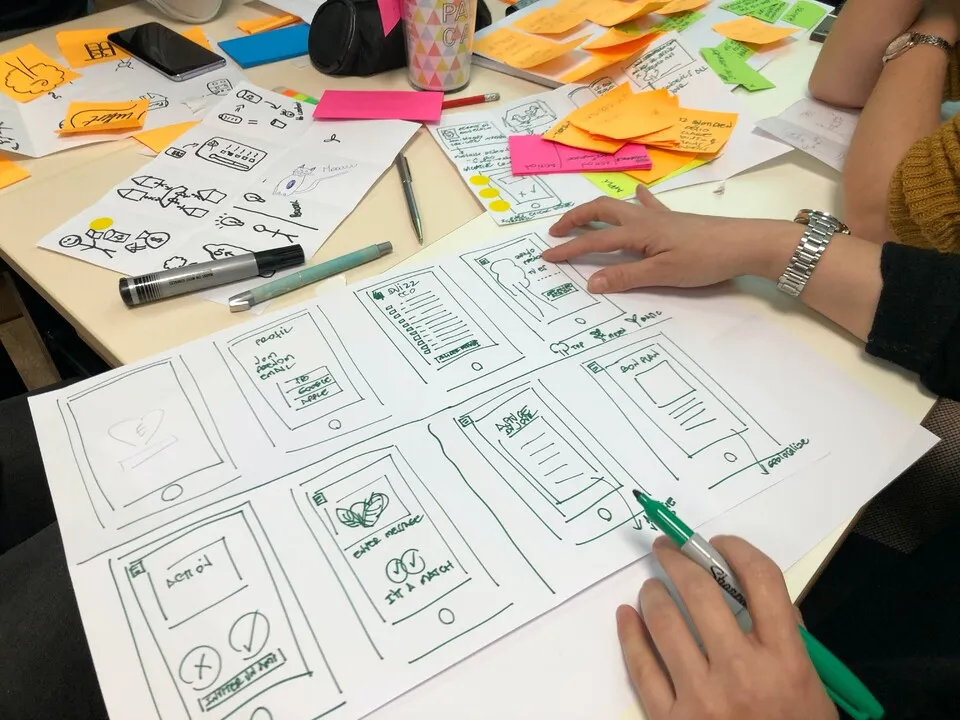
An application prototype is a visual demo of the target future product. It illustrates the product UX/UI design, the user flows and navigation, and the core product features. A prototype will mimic the product user experience and will showcase the app as if it were already fully implemented.
Using a clickable interactive prototype, the product can be shown to potential investors and partners, leading to valuable feedback before the product implementation begins. Tools like InVision can be used to produce “high fidelity” mockup versions of the product illustrating the main user journeys.
Visual prototyping is a powerful addition to the startup pitch. It enables a cumulative learning experience toward a clearer vision of the product roadmap.
It also helps show investors how the product will look and feel. This offers the investor the opportunity to make quicker decisions on adequate funding and to assess the startup’s readiness for raising capital.
WeaveLines as your rapid prototyping service provider
At WeaveLines, we do more than create wireframes and UIs. Our work is the considered translation of your product backlog into a clickable prototype showcasing the main value proposition of your business idea.
Our team advises startup founders and provides UX/UI design services in order to deliver tailored proofs of concept and customized MVPs of web and mobile applications.